Flightsim.to
    Back to Radar
    Neueste Devlogs

    All Devlogs

    The latest devlog updates from every Radar project, in one place.

    Devlog from
    iFly Boeing 737 MAX SP1
    i
    iFlyUpdate
    iFly Boeing 737 MAX SP1 Is Now Out!

    We are pleased to announce the release of the iFly 737MAX SP1 for MSFS 2020 and theExperimental Version for MSFS 2024.

    This is normally the place where we would list bug fixes and additional features added tothe iFly 737MAX in SP1. To do that would require many, many pages! Basically, every part of the aircraft was reworked in some way. With the help of our technical advisors (who are type rated on the real aircraft), systems were extensively updated. In other words, this update is HUGE and could be described as a new product, and it’s totally free, gratis, mahala, 免费, to all purchasers.

    You saw the SP1 list here in the Announcements channel, including a new, tablet style EFB, Cabin voice announcements, a MAX8-200 model, multiple cabin layouts, updated textures, updated sounds, etc., etc.

    Old liveries and cached images must be deleted from the iFly Manager folder: C:\ProgramData\iFlyManager. If left, that data will cause problems. Be certain all liveries are SP1 compatible.

    Devlog from
    Synaptic Simulations A220
    S
    New Trailer Is Out

    Synaptic Simulations confirmed its presence at FSExpo 2026, where attendees can experience the A220 project firsthand and discuss development progress with the team. The development team continues to state that release remains planned for 2026 while prioritizing quality and system completeness.

    Devlog from
    SkyHigh Network
    T
    Official Announcement Trailer - The SkyHigh Network

    Welcome to SkyHigh Network — where virtual aviation is being rebuilt for the future.

    SkyHigh is a next-generation flight simulation community designed to create a living, breathing global airspace that never goes silent. We combine real pilots, active virtual ATC, and advanced AI systems to ensure that every moment in the sky feels alive, structured, and realistic, and the best part is, it is completely free to join and use.

    This is something that has never truly been done before in the world of virtual aviation, a fully connected, always-active network powered by both real people and intelligent AI systems. SkyHigh exists to bring this vision to life and make it work at scale, creating an experience that feels closer to real-world aviation than ever before.

    When members are offline, SkyHigh doesn’t go quiet.

    Our AI systems automatically step in to keep the network alive and operational. If human ATC controllers are not available, AI Air Traffic Control takes over, continuing to provide pilots with clearances, instructions, and structured communication so every flight remains realistic and controlled.

    At the same time, if airports or airspace would normally be empty, AI-generated pilot traffic fills the gaps, creating arrivals, departures, and enroute activity that keeps the environment feeling busy and authentic.

    This means SkyHigh is always active — day or night — ensuring there are no silent skies, no empty airports, and no break in immersion.

    To make this experience even more immersive, we use high-quality AI-generated voice communications that replicate realistic ATC-style phrasing and tone. These voices are clear, professional, and aviation-focused, helping every interaction feel authentic and lifelike even when AI is controlling the flow.

    SkyHigh is built for both pilots and air traffic controllers who want more than just casual simulation. Pilots experience structured operations, realistic routing, and continuous ATC interaction. Controllers get dynamic sectors to manage, supported by real pilots and AI-generated traffic that keeps every session active and engaging.

    To support growth and realism, SkyHigh provides full training systems for both pilots and ATC controllers. New members can learn procedures, communication standards, and operational workflows through structured guidance, helping them progress from beginners to confident, skilled operators within the network.

    Beyond the technology, SkyHigh is a growing aviation community. We host weekly events around the world at different airports, bringing pilots together for coordinated group flights, fly-ins, and special operations in a wide variety of global locations. These events create shared experiences where members can connect, fly together, and operate in busy, real-world-style environments.

    We also run regular community activities, training sessions, and engagement events that strengthen teamwork between pilots and controllers at every level of experience. Whether flying solo or joining large-scale operations, there is always something active happening.

    We also offer structured progression pathways for both pilots and ATC, allowing members to earn ranks, build experience, and develop within a professional-style virtual aviation environment. Our staff team supports ongoing development, training, and continuous improvements to keep the network evolving.

    SkyHigh Network is more than a virtual airline or ATC network, it is a fully immersive, free-to-join aviation ecosystem where realism, training, technology, and community come together.

    SkyHigh Network — The Network of the Future.

    Join our Discord: https://discord.gg/5y7y26nuUk

    Devlog from
    Grumman AA5
    B
    NEW RELEASE - GRUMMAN AA5 FOR FS2020 & FS2024

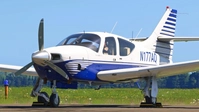
    Now available from Just Flight - AA-5 Traveler, AA-5A Cheetah and AA-5B Tiger variants of Grumman's four-seat 1970s tourer/trainer!

    Bluesky Hangar's Grumman AA5 collection brings you the three main AA5 variants - AA-5 Traveler, AA-5A Cheetah and AA-5B Tiger - each with highly detailed interior and exterior models, PBR materials and accurate flight dynamics which match the differences in engine and airframe.

    Devlog from
    KORD - Chicago O'Hare
    i
    iniBuildsScreenshot
    Early Previews from the project

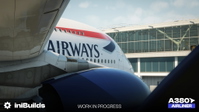
    We're excited to share these early previews from the project, including a first look at various terminal areas and interior spaces currently under development. Whilst there is still to be done, we're incredibly pleased with the progress made so far and cannot wait to show more of what is shaping up to be one of our most ambitious airport projects yet!

    Devlog from
    Virtual Medical Dispatch
    C
    CaptainRafaelMilestone
    Devlog #1 — Bringing Crew Scheduling to Life: Inside VMD’s Roster System

    Hey everyone,

    I wanted to share some progress on one of the biggest systems I’ve been working on for Virtual Medical Dispatch (VMD): the roster generation system.

    At first, I thought crew scheduling would be relatively straightforward just assign available pilots and medical staff to missions and call it a day.

    I was very wrong.

    The deeper I went into how real medevac and air ambulance operators work, the more I realized roster planning is basically the heart of the entire operation. If the wrong crew is scheduled, the mission simply doesn’t happen.

    And for a simulation that aims to feel realistic, I didn’t want the system to just “spawn crew” magically.

    I wanted it to feel alive.

    More Than Just Pilots

    One thing I quickly learned is that medical aviation isn’t only about aircraft.

    Sure, you need pilots.

    But depending on the mission, you may also need:

    • Flight nurses
    • ICU doctors
    • Paramedics
    • ECMO specialists
    • Dispatch coordinators
    • Ground transport staff

    A simple patient transfer might need:

    • 2 pilots
    • 1 nurse

    But a critical long-range ICU transfer could need:

    • 2 pilots
    • 1 relief pilot
    • 1 ICU doctor
    • 2 flight nurses
    • Specialized equipment team

    That changes everything for scheduling.

    Not Every Crew Can Do Every Mission

    This became one of the most interesting parts to build.

    In most flight sims, crew are generic.

    In VMD, every crew member has qualifications.

    For pilots:

    • Aircraft type rating
    • IFR certification
    • Night operation clearance
    • Special airport training

    For medical staff:

    • Trauma certification
    • Neonatal care
    • ICU experience
    • ECMO certification

    For example, if you’re flying an ECMO mission using a long-range jet like a Bombardier Global 6000, you can’t just assign whoever is free.

    The system checks whether that exact crew is qualified.

    That immediately made dispatch feel much more real.

    Fatigue Became a Huge Deal

    This is where things got fun (and painful to code).

    I didn’t want to stop at “legal duty time.”

    In real life, someone can technically still be legal to fly while being completely exhausted.

    So I built a fatigue model.

    The system looks at things like:

    • Night shifts
    • Consecutive missions
    • Sleep disruption
    • Long duty periods
    • Time zone changes

    Every crew member now has a fatigue score.

    That means the dispatcher might see:

    Captain available? Yes.
    Safe to launch? Maybe not.

    That small detail changed the whole feel of the sim.

    Now decisions become much more human.

    Do you launch immediately with a tired crew?

    Or wait 45 minutes for a fresh team?

    That’s exactly the type of pressure I want players to feel.

    Home Base Matters Too

    Another thing I added is crew positioning.

    Crew aren’t teleporting around the map.

    Each person has a home base.

    Examples:

    • Nice
    • London
    • Dubai

    So if a mission comes in from another region, the system asks:

    • Is the crew already nearby?
    • Do they need repositioning?
    • Will that delay launch?
    • Is hotel accommodation needed?

    That adds a whole operational layer I really love.

    The Hardest Part: Conflicts

    This is where the sim starts feeling like controlled chaos.

    Imagine this scenario:

    You have one crew available.

    Then suddenly:

    • Organ transport request comes in
    • ICU transfer comes in
    • One pilot reports sick
    • Weather worsens

    What now?

    The roster engine has to prioritize.

    Current priority order is roughly:

    1. Critical life-threatening missions
    2. Organ transport
    3. Scheduled transfers
    4. VIP medical charters

    That means the sim constantly forces tradeoffs.

    And honestly, those moments are becoming some of my favorite parts.

    Making It Feel Alive

    The biggest design goal for me is simple:

    I don’t want Virtual Medical Dispatch to feel like menus and spreadsheets.

    I want it to feel like sitting inside a real operations control center at 3 AM while alarms go off and dispatch phones won’t stop ringing.

    You’re not just managing aircraft.

    You’re balancing:

    • Human fatigue
    • Medical urgency
    • Regulations
    • Costs
    • Aircraft availability
    • Time pressure

    That’s what makes medical aviation fascinating to me.

    It’s messy, stressful, and incredibly dynamic.

    What’s Next?

    I’m currently connecting roster generation with:

    • Mission generation
    • Finance system
    • Aircraft maintenance
    • Live dispatch board
    • ACARS messaging

    Once all of that is integrated, crew planning won’t just affect operations — it’ll directly impact profitability and response capability.

    That’s where things get really exciting.

    More soon 👀

    Wondering when did this project started?

    First build is from summer 2025

    Devlog from
    BlueBird Simulations Boeing 757
    B
    I couldn't help but leak a few screen shots...

    Still WIP. While the beta testers are busy testing, we're churning out some more liveries. In the next 3-4 weeks we'll post a full feature list of the 757. Things are progressing very quickly and we're still on track for our Q3 release.

    In other news, FS Expo is this week! One of our devs will be walking around on Saturday giving away prizes. Here's the details on how to win if you spot him at the Expo:

    1. Say the magic phrase "Blue banana"

    2. Answer a random trivia question correctly

    3. Win either a t-shirt , key chain, or a 1/400 scale 767 model ( only 1 )

    Have fun!

    Devlog from
    Dassault Rafale
    A
    Rafale Startup Video

    As development of the Rafale continues at full pace, we felt it was time to show the aircraft in a more complete and realistic flight context.

    Until now, most previews have focused on specific features or visual details. This time, we are taking you through a typical autonomous startup sequence, from a cold aircraft to a ready-to-fly machine.

    In this video, you will see several systems and procedures in action, including APU and engine startup, inertial navigation system alignment, flight control system checks, avionics initialization, and more.

    This sequence gives a better sense of the level of precision and depth we have put into the reproduction of the aircraft’s systems, including the electrical and hydraulic systems. Many of these elements interact throughout the startup procedure, and this is the first time we are showing them working together in such a complete context.

    It is also a great opportunity to hear more of the custom sound package specially crafted by Echo19, designed to give the aircraft a distinctive and immersive sound environment.

    The project has reached an important stage, and we are doing everything we can to aim for a public release during the summer. Several major areas of the aircraft are now considered complete, pending final testing and refinement, including the 3D model, textures, flight model, fly-by-wire system, and performance tuning.

    The remaining work is focused on the depth of the onboard systems and avionics. We are currently fine-tuning the autopilot and its various modes, implementing flight plan management, and adding the last remaining pages to the lateral displays.

    Many other innovative features are still to be revealed, and we look forward to sharing more about them soon.

    We hope this video makes the wait a little easier.

    Devlog from
    CSS Boeing 737-300 & 737-400
    737 Classic Family Released

    Dear Captains!

    It's time to get your pilot licenses and start the engines of the entire 737 Classic family.

    I'd like to remind you that those of you with an active temporary license or $120 family license have automatically gained access to the 737-300 and 737-400 models. Those who want to permanently purchase any individual variant can do so through our Launcher or partner stores.

    Keep in mind that purchasing any individual variant will lock you out of any of the temporary or family package options. The temporary license will remain available via the CSS Launcher only from this day forward. Please read the aircraft documentation carefully!

    If you have any difficulties registering, please contact our @Support_CSS team here, by email, or via the website contact form. We are using our new CDN, but downloading may take some time, as we expect our servers to be under high load.

    Thank you for your patience, and enjoy the 737 Classic!

    Showing 1 - 18 of 23 results