
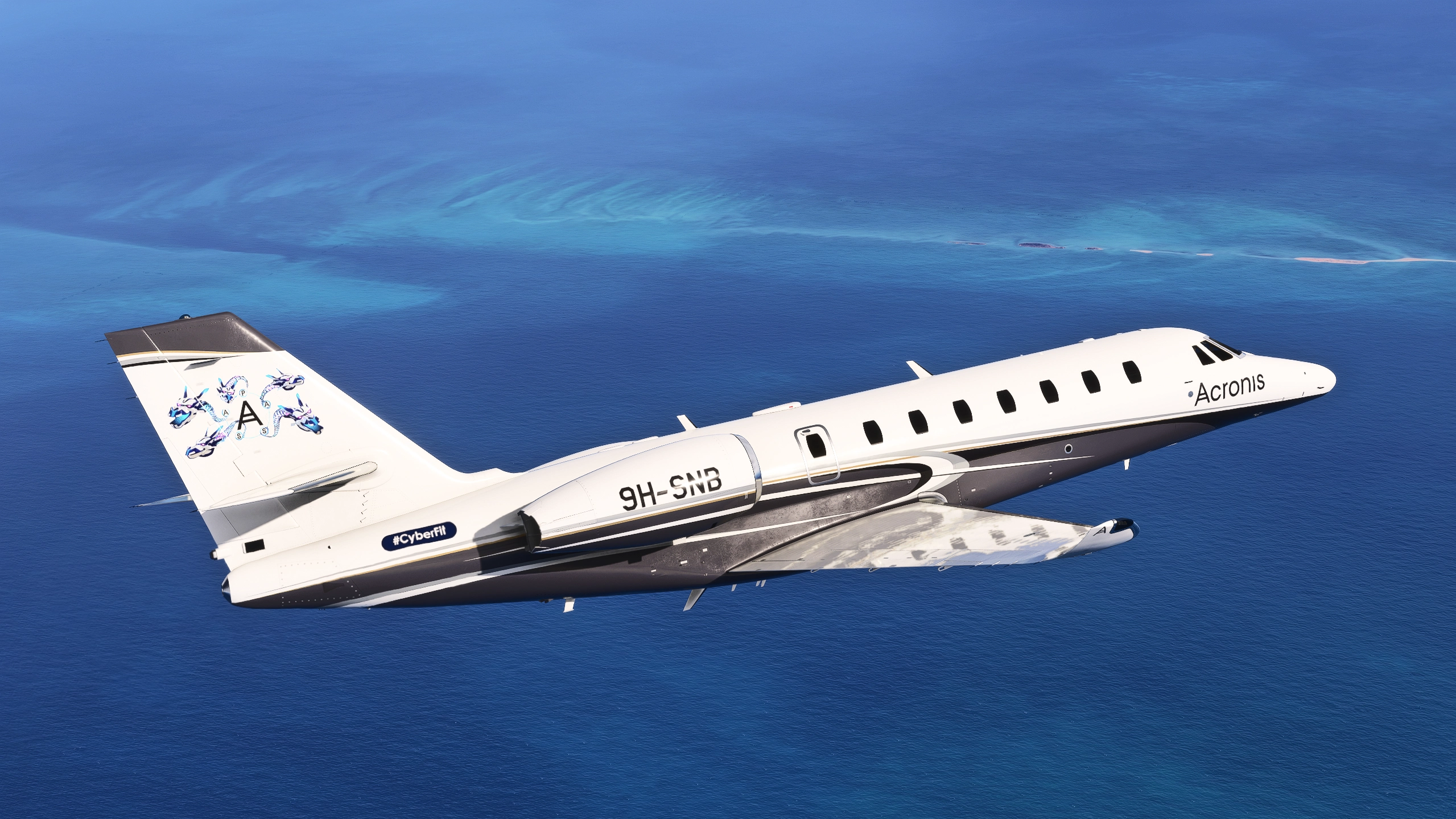
This highly detailed simulation of the Citation Sovereign+ has been developed with a strong emphasis on system fidelity, flight model accuracy, engine performance, and real-world behavior. After undergoing multiple development iterations, with continuous refinement of its avionics, systems, sounds, flight model, and way more, using real-world references and structured testing from a pool consisting of over 80% pilots, many of whom fly the 680 type on a day-to-day basis.
The Sovereign+ is a mid-size business jet designed for high-altitude, high-speed cruise, strong climb performance, and operational flexibility with respect to runway performance. In this simulation, those characteristics are not guessed—they are derived from countless hours of documentation research and pilot consultation. From simulating dual-FADEC channel availability based on electrical states and other factors to an incredibly high-fidelity recreation of a Garmin CPDLC and ACARS feature set, countless hours have been poured into the many systems across the Sovereign+.
Model
The aircraft has been modeled with attention to both visual fidelity and functional interaction. The goal was not just to recreate the appearance of the Sovereign+, but to ensure that the aircraft feels alive and responsive in all operational contexts.
- Highly detailed exterior and interior models with accurate proportions and refined geometry
- Interactive cockpit and cabin elements, including functional panels, switches, and system interfaces
- Refined lighting system throughout the interior and exterior
- Dynamic and static registration support
- Optimized textures and level-of-detail management for consistent performance
- Optional ground equipment and environmental elements to enhance immersion
Cockpit
The cockpit has been designed as a fully interactive environment where functionality takes priority over simply visual representation. Almost every control is integrated into the simulation and tied directly to system logic in some way.
- Fully interactive flight deck with numerous functional switches, knobs, and controls
- Garmin G5000 avionics suite with custom PFD, MFD, and GTC plugins
- System synoptics for electrical, fuel, and hydraulic systems
- CAS messages are driven by a data bus architecture that relies on inputs from other systems and their respective electrical power states
Electrical System
The simulated electrical system is among the most advanced ever seen in Microsoft Flight Simulator, simulating many components, even down to the PCB level of many systems.
- High-fidelity architecture of close to 60 buses, 60 relays, transformers, 600 circuits, 100 diodes, and more
- Numerous simulated printed circuit boards based on the real board logic documentation, processing inputs and outputs across many systems
- Two 28V transformer rectifier units, which are used in tandem with the left and right alternators to power the aircraft in the event of generator failure
- Two 24V 44Ah nickel-cadmium main batteries with hot buses included
- One 24V 1.17Ah nickel-cadmium standby battery to power the standby instrument
- Four 24V 1.17Ah nickel-cadmium emergency batteries to power emergency lighting around the airplane
- One 28.5V ground power unit to assist in electric engine-starts if required
- Two permanent-magnet alternators to power the dual-channel FADEC if all remaining electrical power is lost
- Two 28V DC engine-driven generators capable of delivering 100 amps of load throughout the airplane
FADEC and Engine Systems
The FADEC system dynamically controls engine behavior rather than using fixed values.
- Accurate thrust modes, including TO, MCT, CRU, T/R, and APR
- Two dual-based FADEC channels to command and monitor engines, which rely on their power state and sensor inputs from other data modules, such as the weight-on-wheels and bleed air control logic board
- Accurate calculations of takeoff, climb, and cruise thrust limits with anti-ice off and on
- Accurate modeling of N1, N2, ITT, and fuel flow relationships in many parts of the flight envelope, especially during climb, cruise, and descent
Flight Model
The flight model has been refined to reflect real-world performance trends across the entire envelope.
- Tuned lift and drag coefficients for accurate climb time and fuel, cruise, and descent phases of flight
Hydraulic and Fuel Systems
- Hydraulic system governing braking, landing gear, speedbrakes, spoilers, wheel brakes, thrust reversers, nose wheel steering
- Accurate parking brake operation with the capability to toggle between realistic and unrealistic modes
- Fuel system with crossfeed capability, boost pump logic, and accurate tank modeling
Bleed Air, Anti-Ice, and Environmental Systems
The pneumatic system connects multiple subsystems and plays a central operational role.
- Detailed line and valve architecture accounting for valve power state, PCB behavior, and more
- Engine and APU bleed sources with automatic selection logic based on bleed air control logic boards built to OEM specification
- Integration with cabin pressurization and environmental control systems
- Anti-ice system covering wings, engines, stabilizer, and windshield
The anti-ice system also includes temperature monitoring, rate-based valve actuations, and state-dependent behavior influenced by aircraft conditions and other system-based data. Electrically controlled valves respond to both pilot input and actual system state, with CAS logic reflecting discrepancies when they occur.
Landing Gear and Emergency Systems
Landing gear behavior reflects both normal and abnormal operations and integrates well with board logic and the hydraulic system.
- Hydraulically driven extension and retraction
- Gravity-assisted deployment when hydraulic pressure is lost
- Pneumatic blowdown system for emergency extension
- Mechanical uplock release mechanisms via cockpit and cabin interaction
- Aerodynamic influence on gear behavior during abnormal scenarios
- Nitrogen emergency brake simulation
Avionics and Datalink
The avionics suite integrates directly with aircraft systems and external communication.
- Garmin G5000 avionics with full system integration
- Platform-agnostic ACARS and CPDLC functionality (PC only)
- D-ATIS support for FAA and VATSIM
- Text NOTAMs support with active simBrief flight plan
Crew Alerting System (CAS)
The CAS system reflects actual aircraft logic and system state.
- Advisory, caution, and warning messages are generated based on an accurate data bus structure and other system modules’ outputs
- Takeoff, landing, engine shutdown, and bus fail inhibit states
Electronic Flight Bag (EFB)
The EFB provides a centralized interface for aircraft management and flight preparation.
- SimBrief integration for flight plans, fuel, and weather
- Weight and balance configuration with payload management
- Ground services and aircraft state control
- System pages, including electrical, oxygen, and configuration
- Navigraph charts and flight planning tools
- Over 300 checklists, including abnormal and emergency procedures referenced from the real Airplane Flight Manual
Sounds
Sound implementation complements the system depth and operational realism. The sounds are recorded from the real airplane and put together into the simulation by Boris Audioworks.
- Custom sounds for all aircraft-related systems with close attention to detail
- Sound effects for all interactive elements in and outside the airplane
- Volume controls for exterior and walk-around volumes
The new, highly accurate electrical architecture is only available in Microsoft Flight Simulator 2024, as it relies on improvements and capabilities only found in the new electrical simulation. The future 2020 version will feature a slightly modified but still highly accurate representation of the real electrical system.