
Beschreibung
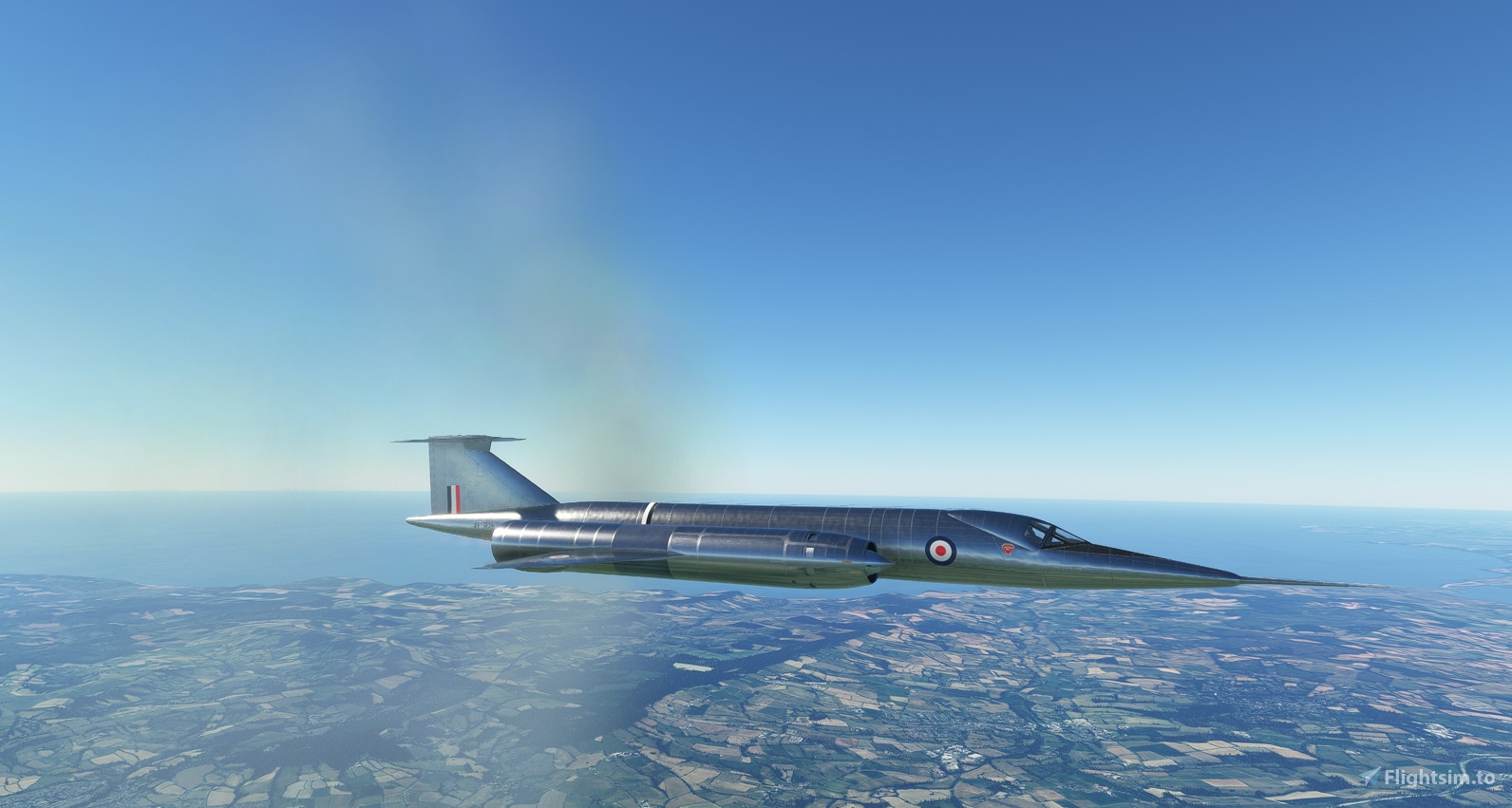
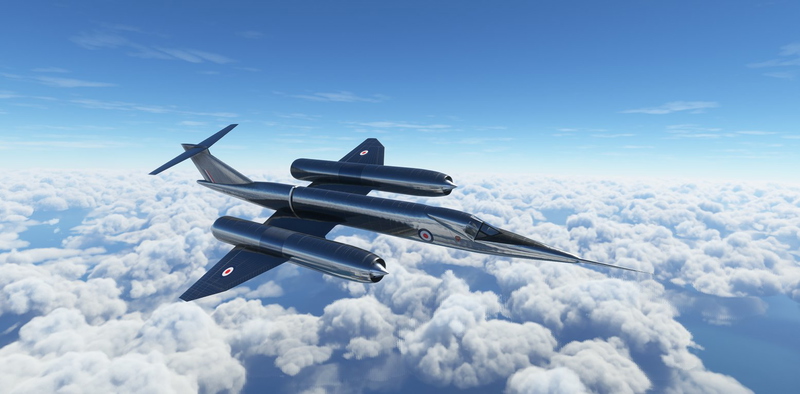
Bristol Type 188, the 'Flaming Pencil' was a British highspeed research aircraft. Designed to meet operational requirement ER.134T for a testbed capable of speeds greater than Mach 2. Due to the anticipated effects of kinetic heating at high Mach numbers, the fuselage was constructed of stainless steel. Two aircraft were built, XF923 and XF926. First flight of XF923 was on 14th April 1962 and then XF926 with upgraded Gyron Junior engines on 29th April 1963. Ironically, the Maximum speed achieved was Mach 1.88 at 36,000 ft. Although the top speed of the Type 188 was disappointing, the airframe advanced understanding and knowledge of structures, oils, electrics, hydraulic fluid, bearings, tires, windows and cabin environment at high temperatures as well as telemetry which was used during the development of Concorde. Last flight was 11th January 1964.
One Bristol Type 188 remains at the RAF Museum, Cosford.
General characteristics:
Crew: one
Length: 77 ft 8 in (23.68 m)
Wingspan: 25 ft 1 in (10.70 m)
Height: 13 ft 11 in (4.23 m)
Wing area: 396.25 ft² (36.85 m²)
Gross weight: 37,500 lb (17,010 kg)
Powerplant: 2 × de Havilland Gyron Junior DGJ.10R turbojet, 10,300 lbf (44.4 kN) dry, Reheat 14,000 lbf (62.2kN), 20,000 lbf (88.9 kN) at 36,000 ft.
Landing approach speed 188 knots.
Top Speed: Mach 1.88.
Install Instructions:
1. Copy tgsims-bristol-t188 folder to your MSFS 2020 Community folder.
2. Copy tgsims-t188-effects folder to your MSFS 2020 Community folder.
Thanks:
This aircraft was made using Blender 3.1.0, Adobe Photoshop and Substance 3D Painter.
Thank you to the FSDeveloper and FS2 community for all your help.
Contact and Feedback:
tylerjgladman@gmail.com
**** License ****
Legal:
This file is freeware. It may not be distributed without permission in any form. The
software is provided as-is, and the author does not accept any liability with
regards to its use.
This software is provided "as is" without express or implied warranty.
PLEASE DO NOT place these files anywhere that requires a fee for downloading.
PLEASE DO NOT place any of these files in any commercial package or any CD collection.
They (the files contained here in) cannot be used in any payware/shareware or any method that requires payment.
Model, textures, coding and documentation: Tyler Gladman
Version History:
V1.0.0 - Initial release.
Tyler Gladman
June 2023
Bristol Type 188 Flaming Pencil
Bristol Type 188, the 'Flaming Pencil' was a British highspeed research aircraft. Designed to meet operational requirement ER.134T for a testbed capable of speeds greater than Mach 2. Due to the anticipated effects of kinetic heating at high Mach numbers, the fuselage was constructed of stainless steel. Two aircraft were built, XF923 and XF926. First flight of XF923 was on 14th April 1962 and then XF926 with upgraded Gyron Junior engines on 29th April 1963. Ironically, the Maximum speed achieved was Mach 1.88 at 36,000 ft. Although the top speed of the Type 188 was disappointing, the airframe advanced understanding and knowledge of structures, oils, electrics, hydraulic fluid, bearings, tires, windows and cabin environment at high temperatures as well as telemetry which was used during the development of Concorde. Last flight was 11th January 1964.
Downloads gestoppt
Der Ersteller hat die Downloads für dieses Addon vorübergehend gestoppt. Bitte versuche es später erneut.

Unterstützer

Nutzerbewertungen
36 Bewertungen
Versionsgeschichte
V1.0.1 - Added camera views. Added checklists. Fixed fuel cut-off after menu switching.
Melden Sie sich an, um an der Diskussion teilzunehmen
AnmeldenKommentare(87)
almost 3 years ago
almost 3 years ago
almost 3 years ago
good looking model nice smooth flight
i am not sure if it is like this in real life but it was very very fast and it got up to speed too fast again not sure how it is irl but it flies very good and it was also very maneuverable (it could pull about 8 g's) which isn't realistic but pretty fun to fly.
if you don't use trim it would be very hard to fly but if you do and don't mind fideling with it go for it.
the cockpit textures were very nice aswell
almost 3 years ago
It was a high speed research aircraft, but you should not be able exceed much more than Mach 2.
almost 3 years ago
Asking because working on an add-on aircraft myself that also is a historical one with single-spool no-bypass turbojets.
almost 3 years ago
Thank you for the five stars.
I haven't found a manual for the Bristol 188, but I have pieced together information for this aircraft from may articles and books and have also manged to track down a manual for the Gyron Junior engine.
Although a single spool engine, I found during tweaking the engine.cfg that a lower N1 speed provided more acceptable engine responses for acceleration and EGT. Matching the N1 and N2 speed seems to lower the indicated EGT readings and limit engine RPM. The lower N1 also simulates engine choking at low altitudes due to the static intake of the 188. I'm not sure if the sim takes into account variable inlet guide vanes, compressor and turbine stages, momentum and angular velocity etc.
about 3 years ago
I only have one question and it may be because of my lack of knowlege on this aircraft.
But on final with Full flaps and both engine on idle, the aircraft doesn't bleed any speed.
I can keep up with 150 - 180 kt easily.
Is it because on idle, the engines produce thrust ?
about 3 years ago
Yes, at idle the engines still produce thrust, but the engines need to be running higher than idle during landing to maintain electrical and hydraulic services etc and for a possible over shoot and go around. Deploying air brakes will allow higher RPM settings and a better range to control airspeed. This will result in a higher landing speed to stay out of the stall region and use of the chute (I still need to find a way to make the chute slow the aircraft in the sim, other than just link it to the wheel brakes, which I have not done as I don’t think that would be the right effect).
about 3 years ago
about 3 years ago
about 3 years ago
about 3 years ago
about 3 years ago
great work
about 3 years ago
about 3 years ago
about 3 years ago
Are you using the Modern Flight Model?
about 3 years ago
about 3 years ago
but the plane isi not moving not only this model but most of the models arent workin ... the cockpits are working perfectly only the plane is not moving help me